
Rules for Interior Decorating
Posted by - Kaelyn Harding on Apr 16th 2019
The rules of interior decorating are things we usually pass off to people who star in HGTV home-remodeling shows. There’s a lot of them, from color theory to pattern matching, and what you can or can’t put on your front porch in spring. Of course, most of us don’t bother to deal with these rules, and if we care, we hand the task off to Interior-Designers, like the infamous Scot Wood, that have made a living studying these theories so that their customers don’t have to.
But sometimes we just really need to know a few tricks of the trade: things like “how big is too big” or “Should I use a large painting or a small one in this space?” And for those situations, there are a few quick and easy rules you can follow. This week’s blog will deal with one of the first.
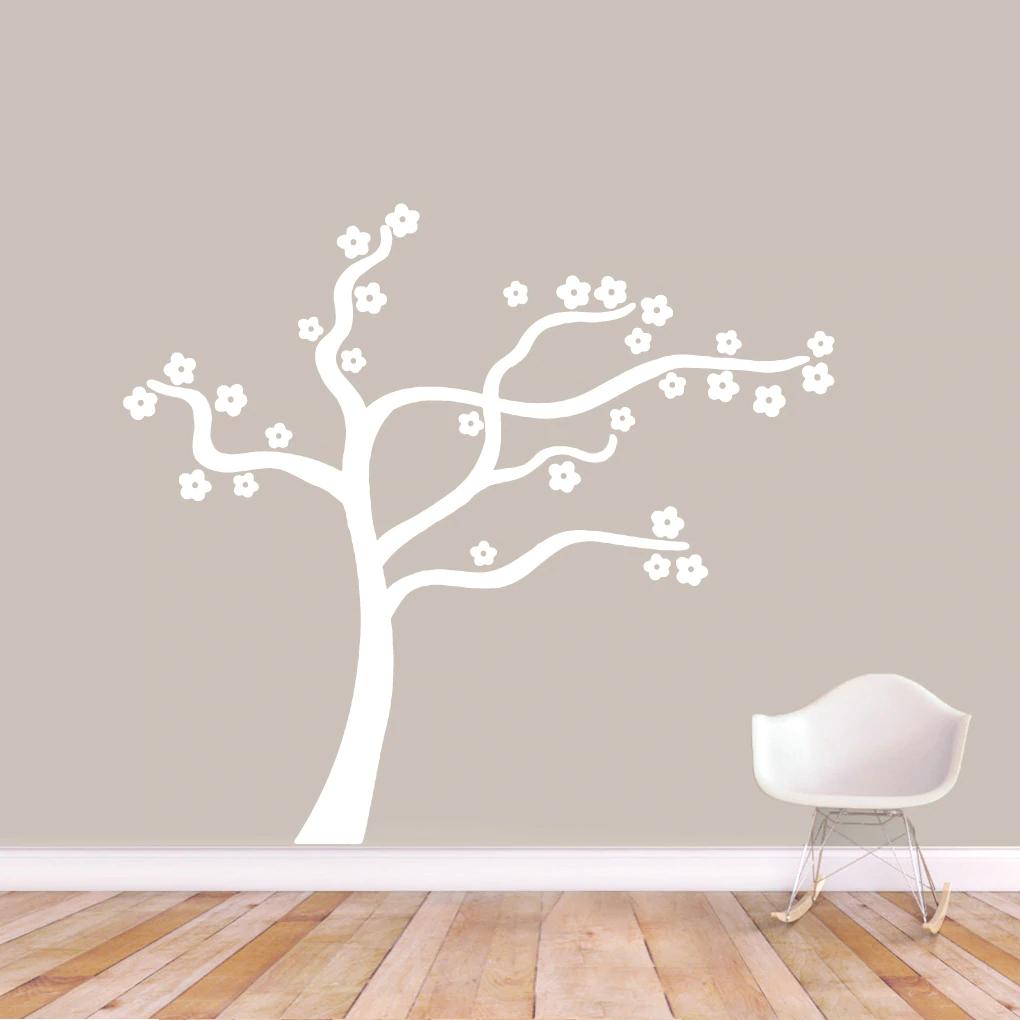
1. Motion is king.
Most rooms are box-shaped, and most of our furniture at its core is too. So, when you have to put a sofa and a painting (or a decal) along the same wall, what is the relationship those two objects should have? Should the painting be off-center from the couch? Should it be the same size as the couch? Bigger? Smaller? Multiple paintings?
What you really want is first to decide what you want that wall to be *about*. When you look at the wall, do you want to see just another part of the room as a whole, or is it a large focal wall that will be the attraction? If you want the wall to just blend in, you want the picture to be smaller than the couch, because, with the visually larger piece on the bottom, attention is drawn to the floor, not toward the ceiling.
If you want the wall to host a custom portrait or collage of family pictures, expand *beyond* the couch, and try to arrange the frames or fixtures in a way that “grows” higher, or that leans toward a window.
Why? Because creating a sense of motion is how to direct minds and eyes where you want them to go. Like the natural flow of a river, our brains chase the aesthetic properties of perceived motion. If a ball rolls downhill, we are more likely to watch the ball than to stare at the top of the hill. The same effect can be achieved with static objects, so long as our brains *perceive* the idea of motion. An asymmetrical set of shelves leading up to a large bay window will draw attention to the view. A cluster of bright blue objects stacking slowly to the ceiling will lead the gaze up. A glass coffee-table atop a bold colored rug will lead the eyes down.
Stay tuned soon for more rules of interior decorating, and you can make your living space your dreamspace. To see how Sweetums Signatures can help you create your vision, visit our custom request page here!